
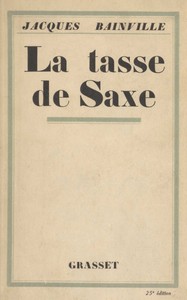
La tasse de saxe by Jacques Bainville
Jacques Bainville is best known as a sharp-eyed historian, but in La Tasse de Saxe (The Saxon Cup), he turns that keen gaze inward, to the heart of a middle-class French family. The story is elegantly simple, which is where its power lies.
The Story
A young couple, part of France's respectable but not wealthy bourgeoisie, receives an astonishing wedding gift: an authentic, exquisitely crafted 18th-century cup from the famous Saxon porcelain works. This isn't just a nice teacup; it's a piece of art, a relic of a vanished aristocratic world. The gift throws their quiet, practical life into a gentle turmoil. The cup is too fine, too valuable, too different for their everyday existence. It creates a weird kind of social anxiety. Do they display it and risk seeming pretentious? Hide it and insult the giver? Sell it? The cup becomes a silent, gleaming guest at every family gathering, stirring up unspoken feelings about money, status, and identity.
Why You Should Read It
What grabbed me was how Bainville makes you feel the weight of that little cup. It's a masterpiece of social observation. He doesn't judge his characters; he just lets you see how this beautiful, useless thing highlights all their small hopes and insecurities. The father might fret about its safety, the mother might polish it with a mix of pride and resentment, and a visitor's offhand comment can feel like a major event. It’s a story about the gap between the life we have and the life we imagine, and how objects can symbolize that gap. Bainville's prose is clean, precise, and often quietly funny. He proves that you don't need a sprawling plot to write something truly compelling.
Final Verdict
This book is a hidden gem. It's perfect for readers who love character-driven stories, sharp social comedy, and historical fiction that feels intimate rather than epic. If you enjoy authors who explore the drama of ordinary life—think Jane Austen's attention to social nuance, but in a French setting—you'll find a lot to love here. It's a short, brilliant study of how the things we own can sometimes end up owning a little piece of us.
Kenneth Clark
3 months agoAs someone who reads a lot, the author's voice is distinct and makes complex topics easy to digest. Truly inspiring.







Michelle Clark
1 year agoRead this on my tablet, looks great.