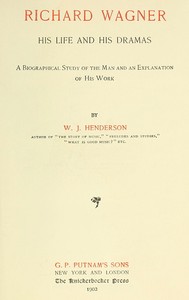
Richard Wagner His Life and His Dramas by W. J. Henderson
W.J. Henderson’s biography, first published in 1901, is less a straight timeline and more of a guided tour through the stormy life and revolutionary work of Richard Wagner. Henderson was a music critic who lived and breathed this stuff, and he writes with the confidence of someone explaining a fascinating, frustrating friend.
The Story
The book walks us through Wagner's journey from a struggling, penniless composer to the most famous and controversial figure in music. We follow his escapes from creditors, his political exile after supporting a revolution, and his relentless hustle to find patrons (most famously, the besotted King Ludwig II of Bavaria). Woven through this turbulent personal story is the parallel tale of his artistic evolution. Henderson clearly explains how Wagner broke all the old rules, creating his concept of the 'Gesamtkunstwerk'—the total work of art that merged music, drama, and stagecraft. We see the birth of epic operas like Tristan und Isolde and the colossal Ring of the Nibelung, set against a backdrop of personal chaos, notorious affairs, and rampant antisemitism.
Why You Should Read It
What makes this old biography still compelling is Henderson’s refusal to give simple answers. He admires Wagner’s musical genius without blind worship. He’s frank about the composer’s monstrous ego, his betrayals, and his poisonous ideas. Reading it feels like having a long, honest chat with a very knowledgeable critic. You get the sense that Henderson is just as fascinated and troubled by Wagner as we are. The book doesn’t let you just enjoy the music in peace; it makes you think about the messy human cost of great art. It’s a portrait of obsession, showing how a single-minded, often unpleasant drive can somehow channel itself into creating something transcendent.
Final Verdict
This is the perfect read for classical music fans who want to understand the drama behind the drama. It’s also great for anyone interested in the age-old debate about separating art from the artist. Henderson’s writing is clear and engaging, even when dealing with complex musical ideas. You don’t need a PhD in music theory to follow along. Just bring your curiosity about one of history’s most brilliant and difficult creative minds. Be prepared to have your admiration tested, and to see the majestic world of opera in a much grittier, more human light.