
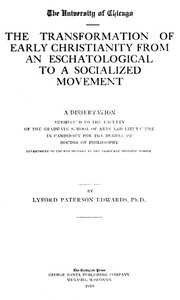
The Transformation of Early Christianity from an Eschatological to a Socialized…
Lyford P. Edwards' book isn't your typical history. It doesn't just list dates and councils. Instead, it follows a single, powerful idea: the massive pivot early Christianity had to make when its central expectation failed to materialize.
The Story
The story starts with a community on the edge. The first Christians, many of them Jewish, believed Jesus would return very soon—within their lifetimes—to wrap up history and establish God's kingdom. This "eschatological" hope shaped everything: how they lived, what they valued, and how they saw the world. They were temporary residents, just passing through.
But decades passed. Then a century. The world didn't end. New generations were born into the faith without that urgent sense of imminence. Edwards walks us through what came next. How does a faith built for a short sprint adjust to a marathon? He shows the gradual, often unconscious shift toward building permanent structures—churches, creeds, clergy hierarchies. It's the story of a radical, world-rejecting movement slowly becoming "socialized," learning to live with and within the very society it once saw as doomed.
Why You Should Read It
What grabbed me was how human this all feels. It's not a tale of corruption or betrayal, but one of practical problem-solving. Imagine your book club, convinced the author is showing up next week, but he never does. Do you disband? Or do you start discussing his old letters more deeply, appoint a discussion leader, and maybe rent a permanent meeting space? That's the kind of relatable tension Edwards explores. He makes you see the early church not as a monolithic institution, but as real people figuring things out as they went along, making tough calls about community, authority, and what their faith really meant in a changing world.
Final Verdict
This book is perfect for curious readers who enjoy big ideas about how societies and beliefs change. You don't need a theology degree. If you're interested in history, group psychology, or how organizations adapt to survive, you'll find a lot here. It's especially rewarding for anyone who has ever wondered how the religion we recognize today emerged from such different beginnings. It’s a thoughtful, accessible look at one of history's most significant transformations.
Elijah Clark
6 months agoAmazing book.
Noah Nguyen
7 months agoFast paced, good book.
Liam Flores
1 year agoI started reading out of curiosity and the flow of the text seems very fluid. Exactly what I needed.
Michael Clark
1 year agoMy professor recommended this, and I see why.




Sandra Thomas
5 months agoAmazing book.